• Skip to primary navigation
  • Skip to main content
  • Skip to footer
NailKnowledge

NailKnowledge

  • Courses
  • eBooks
  • eBook Basket
  • Knowledge Base
    • Knowledge Base
    • Ask the Experts
    • Glossary
  • News
  • Blog
  • Gallery
    • Nail Art Gallery
    • Nail Artists
    • Join the Elite
  • Login

General Information

Why Nail Training and Dedication Are Essential for Success

Breaking the Nail Industry Myths: Why Nail Training and Dedication Are Essential for Success

As an educator for the nail training industry, let’s explore common statements I hear in the nail community;

1. “I can’t afford the nail training.” (but you buy all the latest gel collections)

You will never earn a decent salary while you buy all the shiny things and don’t invest in knowing everything about them to be a master of your craft.

2. “Training is too expensive; I can’t justify the cost.”

While training may have an upfront cost, it can lead to higher earning potential and a more fulfilling career. Think of it as an investment in your professional growth and salary capabilities.

3. “I only do a few clients; It’s not worth doing more training.”

You may have a few clients, but to be desired by the masses you need knowledge and skill. Be one giant leap ahead of your competition.

4. “It’s not my main job; I don’t need to know everything”

Yes, the nail industry is great to fit around family demands, not to mention an enjoyable craft, but it’s far more than a side hustle. Be taken seriously as a nail professional, never be the person who ‘just paints someone’s nails’.

5. “I’ve been doing this for years; I already know it all.”

In any industry, knowledge and techniques evolve over time. There is new terminology, innovation, not to mention new product discoveries. Staying updated and continuing to learn can help you refine your skills and adapt to changing trends.

6. “I can’t find the time for training; my schedule is too busy.”

Investing time in training now can lead to increased efficiency and effectiveness in the long run. Consider it an investment in your future success, work smarter not harder.

7. “I watch a lot of online tutorials; I don’t need formal training.”

Online tutorials can be helpful, but they may not provide the comprehensive knowledge and hands-on experience that formal training offers. Generic how to’s and videos are very practical but may not be specific to all the different brand capabilities. Nor do they cover the theoretical knowledge needed to empower a nail professional.

8. “I’m too old to learn new techniques.”

Age is not a barrier to learning and improving your skills. Many successful professionals continue to learn and grow throughout their careers.

9. “I’ve had a bad experience with training before; it’s not worth it.”

Not all training experiences are the same. And it pains me to say that not all courses are created equal. It’s important to research and choose reputable training programs that align with your goals and needs.

10. “I’m comfortable with my current skills; there’s no need to change.”

Complacency can hinder progress. Bad habits creep in and many do npt even realise they are there. Embracing new knowledge and techniques is empowering. It can lead to growth of your business, increased client satisfaction and the overall reputation of a nail professional.

11. “I don’t have access to quality training in my area.”

while access to in-person training may vary by location, there are often online courses and resources available that can provide valuable education and skills enhancement.

12. “I’m afraid of failure or making mistakes during training.”

Mistakes are a natural part of the learning process. At some point in everyone’s career a mistake will happen, even some become ‘happy mistakes’; a nail art design gone wrong could result in an unexpected work of art! Training provides a safe environment to make and learn from mistakes, ultimately improving your skills.

This mindset will forever hold a professional back, addressing these excuses can help individuals in the nail industry recognise the value of ongoing training and personal development.

Filed Under: General Information, Myth Busting, Nail Services

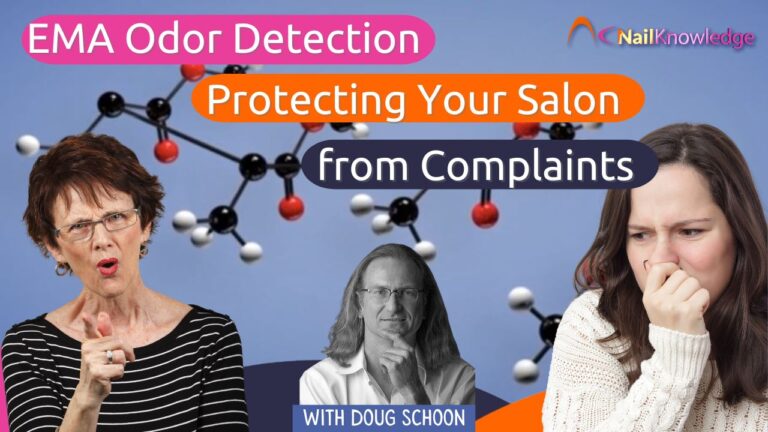
EMA Odor Detection Level: Protecting Your Salon Business from Complaints

Are you a salon owner battling the persistent challenge of EMA odor complaints that threaten your business’s existence? You’ve invested in quality ventilation and air purification systems, but the odor issue persists. Frustration mounts as your local council threatens action due to local resident complaints. In your quest for answers, you’ve stumbled upon a critical question: What is the EMA (ethyl methacrylate) odor detection level, the notorious culprit behind these persistent complaints?

This article seeks to unravel the mysteries surrounding EMA odor detection levels, offering you insights that could save your salon and your reputation. We’ll explore the science behind EMA odors, why conventional air purifiers may not be the solution, and how you can take proactive steps to ensure a safe, pleasant environment for both your clients and staff.

Inadequate Air Purifiers: Why Models Fall Short in Salons

If you are using home/office-style air purifiers, those will not work in a nail salon. Something made for bedrooms or offices should not be relied upon in the salon setting. 

The Science of EMA Odors

The monomer used to create liquid and powder systems is called ethyl methacrylate or EMA for short. EMA is so easy to smell that you can detect its odor with remarkable sensitivity. In fact, you can detect the smell of just one molecule of EMA diluted with one million molecules of air, which in technical terms is referred to as 1 part per million (ppm).

Ventilation is important for all salons.  In my view, if you can’t afford proper ventilation to ensure the work place breathing air is of good quality, then you should not be performing these services.

It is that important.

Ensuring EMA Safety Through Adequate Ventilation

Proper ventilation is a requirement to working safely and all salon and school owners are responsible for ensuring that those in the building are receiving good quality air. 

I strongly advise reaching out to a specialized company that can address your specific ventilation needs. They have the expertise and knowledge to guide you in selecting the right system tailored to your salon’s requirements.

Filed Under: Business, General Information, Health and Safety

Is the Smell of Acrylic Liquid Linked to MMA?

The Acrylic Liquid Smell: Dispelling the MMA Misconception

Have you ever been told that if your acrylic liquid has a strong smell, it must contain MMA (methyl methacrylate)? It’s a common misconception in the nail industry, but let’s debunk this myth and set the record straight.

Understanding the Smell in Acrylic Liquids

First and foremost, it’s essential to know that all artificial nail systems based on monomer liquids have some level of odor. Even those marketed as “odorless” still have a detectable scent. The intensity of the odor can vary between different brands and products, but the presence of an odor alone doesn’t indicate the use of MMA.

Why Odor Isn’t a Reliable Indicator

Assuming that an acrylic liquid contains MMA solely based on its smell is a reckless generalization. Some of the best and most effective monomer ingredients used in artificial nail liquids do have noticeable odors. Therefore, the presence of an odor doesn’t necessarily imply that the product is unsafe or contains MMA.

The Importance of Safety Data Sheets (SDS)

To make an informed judgment about a nail coating product, it’s crucial to refer to its Safety Data Sheet (SDS), also known as MSDS (Material Safety Data Sheet). If a product contains MMA in a concentration greater than 1%, it must be listed on the SDS.

Red Flags and Safety Precautions

If you find that an SDS for a particular product is not readily available or easily obtainable, it’s a red flag. Nail technicians should exercise caution and prioritize safety. Using nail enhancement products without reviewing the SDS could mean missing essential information regarding proper and safe handling.

The Truth About Acrylic Liquid Smells and MMA Content

While the smell of acrylic liquid can vary from one brand to another, associating a strong odor solely with MMA is a misconception. Always refer to the SDS for accurate information about a product’s composition. Your safety and the quality of your nail applications should never be compromised. Stay informed, stay safe, and provide the best nail services to your clients.

Filed Under: General Information, Lotions, Potions and Polishes, Myth Busting

Is Your Frozen Nail Primer Still Safe to Use?

As the winter months cast their icy spell, nail technicians and enthusiasts alike may encounter a common cold-weather woe: frozen nail products. If you’ve ever opened your nail primer bottle only to find its contents frozen solid, you’re not alone. It’s not unusual for certain nail products, like primers, to succumb to the chill, making you wonder about their safety and efficacy.

When faced with the dilemma of a frozen nail primer, it’s natural to question whether it’s still suitable for use or if you should bid it farewell. To make an informed decision, it’s essential to understand the nuances of this chilly predicament and consider the implications for your nail care routine.

Frozen Nail Primer: Check the Directions

First and foremost, it’s crucial to check the product’s instructions. If the label explicitly states, “Do not refrigerate,” then it’s essential to heed this warning. Some nail primers may have specific storage requirements to maintain their integrity.

Room Temperature is Key

In most cases, a thawed primer should be perfectly fine to use. However, the key here is to ensure that the primer has returned to room temperature before opening the container. Opening it while it’s still cold can lead to moisture condensation inside the bottle, which is less than ideal.

Watch for Signs of Trouble

Keep an eye on your primer’s condition. If you notice that it has become cloudy or has formed a solid powder that settles at the bottom of the container, it’s time to bid farewell to your primer bottle. Refilling and reusing the same bottle might seem economical, but it can lead to contamination and increased lifting issues. The culprit here is a waxy substance, typically concentrated skin oils, which can negatively impact adhesion when deposited onto the nail plate.

Thawing Out the Mystery: The Safety of Frozen Nail Primer

Dealing with a frozen nail primer may seem daunting, but it’s generally safe to use once it has thawed back to room temperature. Always adhere to any provided storage guidelines, and keep a vigilant eye on your primer’s overall condition. Remember, the path to stunning nails involves both artistic finesse and the responsible use of products, ensuring a balance between beauty and safety.

Filed Under: General Information, UV Gel

Nail UV Gel Dust Allergies: Is It Possible to React to One Product and Not Another

Unraveling the Mystery of Allergies to Nail UV Gel Dust

A visit to the nail salon should be a pampering experience, but for some, it can lead to unexpected skin reactions, particularly around the eyes. If you’ve found yourself dealing with severe swelling, redness, and itching in the skin near your eyes after using a new line of nail gel, you’re not alone. You may be wondering, “Can we be allergic to the dust of one UV gel product and not another?”

In this article, we’ll delve into this intriguing question, shedding light on the complexities of nail gel dust allergies and dust sensitivity. Understanding the factors at play is crucial for both nail technicians and clients to ensure safe and enjoyable nail experiences. So, let’s embark on a journey to uncover the truth about nail gel dust allergies and how to safeguard your skin and well-being.

Dust and Allergic Reactions to Nail UV Gel Ingredients

No one becomes allergic to a product, they are allergic to an ingredient (or maybe several) in the product. This is important to understand. If that same ingredient(s) is found in another product, that person will develop allergic reactions to both products, because of the common ingredient they share.  

UV gels are very different from one another, but they often share some similar ingredients, so sensitivity to other products is likely. In this case, I would first suspect the dust.  It is too common for nail technicians to under cure their nail enhancements. When this occurs, the dust created during filing will be rich in uncured ingredients.  The dust should not come into contact with the skin unless properly cured. 

The Delicate Skin Around Your Eyes and Nail Dust Exposure

The thinnest skin on our bodies is around the eyes, so I’m not at all surprised that this part of your face is most affected. You should avoid exposure to under cured dust around your eyes.   Also, look around a crowded room and I guarantee you’ll see several people touching their face, maybe the eye area. We touch our faces more than we realize. Often without thinking, so the face and eye area is often accidentally exposed to monomer liquid or UV gel, etc.

My tips for anyone in this situation are:

  • Make sure you are using the correct UV nail lamp. That’s the one specified by the manufacturer of the UV gel and cure as directed.
  • Avoid curing thick layers, the thinner the better, as a rule.
  • Don’t cherry-pick and mix different UV gels from unrelated brands/systems.
  • Minimize dust and filings, use an oil designed for use with electric files to keep down dust.
  • Invest in a good quality, professional ventilation system designed for salon use.
  • Avoid touching your face and wash your hands after each client.

Preventing UV Gel Dust Allergic Reactions

Safety Measures for Nail Technicians

Once you become allergic to an ingredient, you will likely be allergic to it for LIFE!  Avoid allergies; it’s easy if you work safely and correctly. One way is to ensure this is to follow the UV gel manufacturer’s directions and heed all warnings on the label. Also, make sure to read the Safety Data Sheets (SDS) that are supposed to be provided by the seller of the product.

Filed Under: General Information, Health and Safety, UV Gel

Heating Nail Monomers in Salons

A Wise Practice to Heat Nail Monomers or a Risk?

The issue of warming monomers in nail salons, especially during colder months, has become a topic of discussion. Some salons resort to heating monomer in baby bottle warmers to combat cold temperatures. But is this a wise practice, or does it come with potential risks?  We’ll explore the nuances of warming monomers and why it’s essential to exercise caution.

Understanding the Difference: Warming Monomer Vs. Heating

Warming the monomer to room temperature is a common practice to ensure it remains in its optimal state for nail services. However, it’s crucial to differentiate between warming and heating. Heating monomers to temperatures above normal room conditions can lead to various issues, including service breakdown and potential health risks.

Monomer Discoloration: Service Breakdown Issues to Avoid

Heating monomers beyond room temperature can have adverse effects on the quality of nail services. One significant concern is discoloration, where the monomer may change in color, affecting the final appearance of the nails. This discoloration can lead to client dissatisfaction and harm the salon’s reputation.

Health Risks

Heating monomers can also pose health risks, primarily through increased inhalation of vapors. Overexposure to these vapors can lead to respiratory problems and other health issues. It’s essential to prioritize the safety and well-being of both nail technicians and clients.

A Better Approach: Preventing Cold Monomers

Rather than resorting to heating monomer, a more effective strategy is to prevent it from becoming too cold in the first place. Many salons experience lower temperatures overnight after closing, which can impact the monomer’s consistency. To address this issue, consider storing your nail products inside an insulated container, such as an “ice container” or “chilly bin,” overnight. This simple step will help maintain the products at a suitable temperature, eliminating the need for additional warming.

Prioritizing Product Integrity and Safety

In conclusion, while it’s essential to ensure that monomers are at room temperature for optimal performance, heating them to higher temperatures is not a recommended practice. Doing so can result in service breakdown issues and health risks. Instead, focus on prevention by storing your nail products in insulated containers overnight to maintain their integrity and protect the health of everyone in the salon. By prioritizing safety and product quality, you can deliver outstanding nail services while mitigating potential risks associated with heating monomers.

Remember, the goal is to provide beautiful nails while keeping both your clients and nail technicians safe and satisfied.

Filed Under: General Information, Health and Safety, Nail Services, UV Gel

  • « Go to Previous Page
  • Page 1
  • Interim pages omitted …
  • Page 10
  • Page 11
  • Page 12
  • Page 13
  • Page 14
  • Interim pages omitted …
  • Page 30
  • Go to Next Page »

Level Up Your Nail Insights

Join our Newsletter!
SUBSCRIBE...

Copyright © NailKnowledge

NailKnowledge

  • eBooks
  • About us
  • Courses
  • News
  • Blog
  • Newsletter
  • Glossary

Policies

  • Privacy Page
  • Terms & Conditions
  • Cookie Policy

Support

  • Contact Us
  • Ask the Experts
  • System Support
  • FAQs
English
English
Portuguese Spanish Vietnamese