• Skip to primary navigation
  • Skip to main content
  • Skip to footer
NailKnowledge

NailKnowledge

  • Courses
  • eBooks
  • eBook Basket
  • Knowledge Base
    • Knowledge Base
    • Ask the Experts
    • Glossary
  • News
  • Blog
  • Gallery
    • Nail Art Gallery
    • Nail Artists
    • Join the Elite
  • Login

General Information

The Rise of the UV Gel Manicure

The term ‘gel manicure’ is commonly used as a nail service that provides a UV cured colour coat on the nails. It is not usually a traditional manicure as it may only provide work on cuticles, nail shaping, and, sometimes, a hand massage with suitable creams.

Importance of the UV Gel Manicure in the Beauty Industry

A UV gel manicure is the most popular nail service and has been for the last few years since it was introduced around 10 years ago. It is so popular with clients for several reasons, the main three being:

         1. it is instantly dry so no waiting or polish to dry before leaving the salon
         2. it should stay perfect for 2-3 weeks with no chipping nor loss of shine.
         3. It can strengthen nails and avoid breakages

It does, however, have some downsides:

         1. It commits the client to revisit the salon every 2-3 weeks for removal or maintenance so there is a time and cost investment
         2. The must be some simple home care steps to follow to keep the manicure and natural nails in top condition
         3. It cannot be removed safely at home without some nail damage
         4. Some brands require buffing of the natural nail and, over the nail. and multiple manicures can result in the thinning of the natural nail.

However, this can be compared to having hair coloured i.e., it should only be carried out by a skilled professional, maintained by the same hairdresser and there is some compromise to be made with the condition of the hair that needs home care.

Understanding the UV Gel Manicure

A UV gel polish, like traditional nail polish, is a type of plastic. It comes in a semi-liquid form, allowing it to be painted onto the natural nail in a thin coating. To set the gel, it needs to be cured under a lamp emitting UVA light. Curing is the scientific term for the process of transforming the semi-solid gel into a hard, solid state

Comparing Regular Nail Polish and UV Gel Polish

Regular nail polish is another type of plastic, and it dries in the air as it contains solvents that evaporate, leaving behind a colored plastic coating. It can be easily and quickly removed with a solvent-based polish remover that breaks the bonds between the molecules.

A UV gel polish achieves a similar result, but unlike regular nail polish, it does not contain solvents (unless it is a hybrid gel polish). Instead, it contains special ingredients that react with UVA light to facilitate drying. When it comes to removal, the process remains the same using solvent removers, but it requires a longer contact time with the solvent to break its bonds and aid in the removal process.

Understanding UV Gel Polish and Lamp Technology

To achieve instant drying, a UV gel polish incorporates ingredients that react with UV light, transforming it into a solid state.

Most brands now utilise lamps with LED bulbs, which are still UV but no longer use tubes with gas due to environmental concerns. These LED bulbs consume less electricity and are more eco-friendly.

The bulbs in the lamps should only emit UVA light, which does not cause a tanning effect. However, prolonged exposure to UVA light can lead to minimal aging effects. Notably, a typical gel manicure session lasts around 3 minutes (or slightly longer if nail art is applied). Research suggests that having two gel manicures a month is equivalent to an additional 2 minutes of exposure to daylight each day.

For clients concerned about UV light exposure, wearing fingerless gloves or using SPF protection (while avoiding direct application to the nails) is a perfectly acceptable precaution.

Preparing for a Gel Manicure Service

Educating Clients on Pre-Manicure Nail Care

The health of the natural nail should be the nail professionals number 1 focus. Skilled application and removal should not cause any changes in the condition of the nail.

         However, it is important that the manicure is only applied to healthy nails. Any nails that have an unwanted condition, such as lifting from the nail bed, discolouration, thin or weak nails etc. Sometime this nail service must be refused due to poor condition of the nails. This ensures that any condition is not made worse by the service. Some may need extra help with specific UV gel products to provide extra strength or to smooth a distorted nail plate. Without this extra help, thin and wet nails are not usually suitable for a UV gel manicure as the nail is too bendy for the more rigid coating.

If a service is refused it is the nail professional understanding nail conditions and preserving the health of the nails for the benefit of their client

Proper Removal of Existing Nail Products

For a UV gel manicure all existing coatings should be removed first. Some brands do allow for an ‘infill’. This is where the coating is not removed but the new growth area is covered with a new application of the colour. This is not always recommended, especially if the colour is opaque as the condition of the nail plate should be checked every 2-3 weeks and this can only be done with a clear coating.

 Shaping and Filing Techniques for Gel Manicures

After inspection of the nail plate to check its condition and health, the nails should be shaped according to the clients wishes and the free edge cleaned to remove any loose nail or dirt.

Cuticle Care and Safe Cuticle Removal Practices

A very important series of steps in the process is to prepare the nail plate so that the coating will adhere to the nail surface without lifting or chipping.

The cuticle is a thin and clear layer of non-living skin that sits on the nail plate and is shed by the living skin at the base of the nail, which is actually called the proximal nail fold and NOT the cuticle as many believe. UV gel polish does not adhere to the skin only the nail plate so this thin layer must be very carefully removed without any damage to the nails. This is usually achieved by a cuticle tool or, sometimes by an electric file. Both are safe inexperienced hands. The use of an electric file requires extra training onto of manicure training so clients should ensure their nail tech has a suitable qualification.

There should be no removal of the band of clear ski at the base of the nail using nippers or scissors. This skin is still living and forms a very important seal that prevents pathogens (germs) from reaching the matrix where the nails are grown.

Ensuring Sanitary Conditions in the Salon

The last step before application and after cuticle work is the cleaning of the nail plate. It must have no oils nor moisture on it as these will create a barrier between the nail and the cation and cause it to lift away which will usually result in an infection that starts a pale yellow and develops to a dark green.

It is usually a mixture of a solvent and alcohol which will remove different types of oils. The nail plate has its own natural oils and this will remove them but only temporarily, it will also remove oils from makeup, hand creams and anything else that may be on the nail plate to ensure a clean and perfect surface for the coating to adhere to

Some brands require that the nail plate is buffed. This should only be for removing the shine on the nail and not to scratch the nail. Older formulations relied on these scratches to hold onto the base coat as a physical bond. Modern formulations do not require this scratching as it will eventually damage the nail plate.

Step-by-Step Guide to Gel Manicure Application

Selecting High-Quality Gel Products and Equipment

Many brands have a very specific base coat that is the one that is formulated to adhere to the natural nail. It is usually of a thin consistency and needs to be almost rubbed into the nail as no nail plate is entirely smooth. Its ingredients as such that the coating bonds with the keratin of the nail and creates a strong bond.

 Some brands have the necessary ingredients for good bonding in their colour coat so this step is missed. But always refer to the manufacturers instructions.

Demonstrating the Correct Application of Gel Base Coat

There are different types of bases depending on the brand. Some are called a ‘rubber base’. These are designed for a nail that is a bit weak and bendy so they will move with the nail and not pull against it. Some builder gels are used as a base. This is usually thicker so they can provide some extra strength for a weaker nail They can also be used to reshape a flat nail, for example, to give a more aesthetically pleasing shape.

However, they should not be used for every nail as some do not need them.

All base coats need curing under the UV lamp for the time stated by the manufacturer.

Optimizing Curing Time for Each Layer of Gel Polish

If a rubber or builder base is used, after curing, there may need to be some shape refinement. This will ensure that the shape is smooth and thin at the base and free edge with a thicker area in the centre of the nail to provide some extra strength.

Before any such shaping the sticky layer must be removed. This is the surface of the coating that is not cured due to the oxygen in the air. An alcohol is used for this and most brands have their own product

Whatever thickness of the builder is needed for the specific nail, it is important to apply it in thin layers. A thick layer can cause burning on the nail bed which is both painful and daggers. It is due to the extreme activity in the polymerisation (curing) process. It is better to apply even 3 thin layers than 1 thick layer as a thick layer will not cure properly and could cause allergy problems due to the uncured product left on the nail.

Key Application Tips for Achieving a Long-Lasting Gel Manicure

After the appropriate base is applied, cured and shaped, it is time for the colour to be applied. Again this must be applied thinly. Even if it takes several coats for a good colour it must be done.

It must be cured in the brands lamp. This should have been tested fr each colour in the range as darker or more opaque colours take longer to cure but the brads testing should have addressed this in the formulation and mechanics of the lamp so just follow instructions.

The edge of the nail must also be sealed, as it takes a lot of knocking, especially when typing. This will help prevent chipping and lifting.

Make sure the sides and base of the colour cots are perfect even and straight and not touching the skin. If any does touch the skin, have an orange stick ready to wipe it away. Do not use your finger or nail unless you are wearing gloves.

If the colour looks wrinkled when out of the lamp it means that you have applied it too thickly and it is not cured. Remove it and start again.

Creating Nail Art and Design Techniques

Nail art is very popular and every nail tech has their own specialities.

It can be applied on colour coats or after the top cat depending on the technique. But clients must make sure to book for art as it can add considerable time to the appointment.

Lastly is the top coat. As with traditional nail polish, a top coat is there for protection and extra shine. It is a different formulation from bases and colour cats and is usually tougher and shinier. It is also used to seal in any art that has been applied. As usual, it needs curing in the UV lamp at the setting and time prescribed by the manufacturer.

After curing, the gel will develop a sticky layer that must be removed using alcohol, taking care not to get any on the skin, as some gel products are known allergens.

Removing Gel Manicures Safely

An opaque UV gel manicure should be removed every 2-3 weeks to check on the health of the nail plate. The only exception to this is if there is a clear coat on the base. Then the colour can be removed (buffing or e-file) to see the nil plate and the new growth prepared as usual and a new colour coat applied.

Apart from this the nails are continually growing and most wearers do not like the bare area of regrowth.

Many pros are pleased to show pictures of their clients nails at 5-6 week of growth with no lifting. This is NOT something to be proud of!! No lifting is just the nail pro doing their job properly but also demonstrates that they have not educated their clients on what is best for the health of their nails!

Some people have lost all their nails to an allergic reaction that wasn’t spotted intimately. This takes many months to grow out and has an impact on other areas of health for a lifetime! It isn’t worth it.

The Importance of Professional Gel Removal Services

Removing a UV gel polish at home is not recommended due to the time and care it requires, typically ranging from 1-3 minutes, depending on the brand. The proper removal process involves soaking the nails in the correct remover, and some top coats may need to be gently buffed beforehand. Attempting to pick off the coating can be most damaging, as it may peel away layers of the nail and considerably weaken them. For safe and efficient removal, it is best to seek the assistance of a professional who knows how to handle the process.

Gentle and Non-Damaging Gel Removal

Removal should be quick and efficient. Some brands require that their top coat must be buffed first as it does not remove in a solvent. This should be done quickly and safely, i.e. Not buffing through all the layers and not catching the skin.

Then nails can be wrapped in foil with a little piece of cotton wool (the size of the nail plate) soaked in remover, or they can soak in a bowl of solvent covered with a towel to preven evaporation. Or using an electric soaking machine which speeds up the process.

Placing hands on a hot pad of the soaking bowl in a bigger bowl of warm water can speed up the process.

Gel Manicure Maintenance and Aftercare

  • When you leave the salon with your pristine nails, you must commit yourself to some simple home care.
  • Your nails may feel stronger but they are not really so don’t  use your nails as tools as you will just break them.
  • Use a good quality nail oil several times a day. This will not only help the skin around your nails but also help the coating to remain flexible.
  • DO NOT remove or pick the coating off!!
  • If your nail feels odd or you can see any discolouration then contact your nail pro immediately.
  • Make sure you have rebooked for 2-3 weeks later.

Common Issues and Solutions

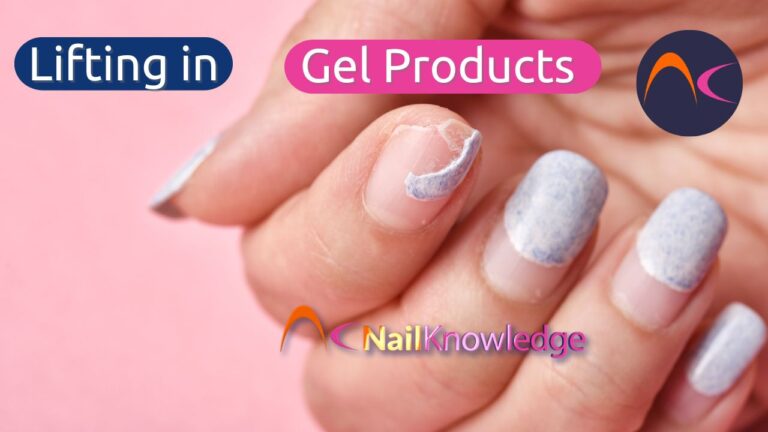
If you notice any lifting of the coating then make an appointment asap. Lifting means that water can seep under it and cause an infection.

Lifting means that the preparation of the nail has not been thorough enough. Maybe some cuticle is left on the nail, the coating has touched the skin or the nail condition is not suitable for a UV gel polish manicure. Not all nails are suitable for a UV gel polish. They may be too thin or even too thick and brittle.

Clients may arrive with damaged nails from previous UV gel polish manicures. The most important is if there are signs of an allergic reaction. If this is suspected then the only option is to remove all product and suggest the client see a GP in the hope they refer to a dermatologist for acrylate testing. This will determine exactly which ingredient/s are causing the reaction. Until this is done it is impossible to know which product can be used again.

Any nail damage must be grown out without any product. The best way is to keep the nails very short and a good nail oil used several times a day. When the nails are healthy, the testing will tell what needs to be avoided. If this is not available, a product that is HEMA free can be tested on one nail and removed in a couple of days to see if there is any adverse reaction. If all is clear, a full manicure can be applied with a strict 2-week appointment to remove to see the nail plate.

Gel Manicure Trends and Innovations

There are many possibilities for nail art when using a UV gel polish. The most popular at the moment is the use of pearlescent pigments over a neutral colour coat.

But glitters, foils and stamping designs can be used with a vast variety of combinations, which are all quick and inexpensive.

Many brands are launching HEMA free products. As HEMA is the most known allergen, it is a good idea to use these. HEMA is used for good adhesion so moving to HEMA free, a far more rigid protocol with nail preparation is needed as the adhesion will be more reliant on a perfectly clean nail plate.

More nail builders are being launched, but it is essential to use them only when needed. Applying builders to nails that do not require them can cause more problems.

The coating should be able to break before the nail does. An overly strong overlay can result in the loss of a nail plate as the coating doesn’t break, but the nail can get pulled off the nail bed!  

Filed Under: General Information, Nail Services, UV Gel

Stepping into Summer: The Ultimate Guide to Soft and Beautiful Feet

It’s Summertime! That means more pedicures and more dry feet….

Summer brings sunny days, beach vacations, and the desire for perfectly pampered feet. As the season of pedicures approaches, clients often seek ways to combat the common issue of dry and hardened soles. Curious minds wonder whether the sun plays a role in drying out their feet and why these calluses form on the bottom sole. If you’re a beauty professional or simply someone yearning for soft and supple feet this summer, you may have come across suggestions like rubbing Vaseline and wearing socks to bed. But let’s delve into the facts behind these questions to uncover the truth and guide you towards the best foot care practices for the warm months ahead.

Does the Sun Dry Our Feet?

Contrary to popular belief, the sun itself doesn’t directly dry out our feet. However, summer weather often encourages us to wear sandals and go barefoot, exposing our feet to more elements than usual. This increased exposure can make us more conscious of our feet’s condition.

Understanding Hardened Skin on the Feet

The hardened layer of skin on the bottom of the feet, commonly known as calluses, is a natural response to friction. When the skin rubs against various surfaces, it thickens to protect itself from the friction and potential damage. Increased barefoot walking and wearing poorly-fitted shoes can contribute to the formation of calluses.

The Importance of Protective Layers

It’s crucial to understand that calluses serve as protective layers for our feet. These hardened areas shield the more delicate skin underneath from harm. Attempting to remove calluses entirely can lead to adverse effects, including open sores, blisters, and infections.

The Myth of Vaseline

Some clients may have heard that rubbing Vaseline on their feet and wearing socks overnight can help achieve smoothness. While Vaseline does create a temporary softening effect by sealing in moisture, it’s not a true skin softener. Once the Vaseline is removed, the skin’s moisture content returns to normal after a few hours.

Optimal Foot Care

To maintain soft and supple feet, it’s best not to completely remove calluses or over-thin the hardened tissue. Instead, consider using professional products specifically designed for softening feet. These products are more likely to provide significant and longer-lasting conditioning, leading to genuinely soft and beautiful feet.

FAQs

  1. Does the sun directly dry out our feet?
    No, the sun itself doesn’t dry out our feet, but increased exposure due to summer activities can make us more aware of foot conditions.
  2. Why do our feet develop calluses?
    Calluses form as a protective response to friction, often caused by barefoot walking or ill-fitting shoes.
  3. Can I remove calluses entirely for smoother feet?
    It’s not recommended to remove calluses entirely, as they serve as essential protective layers for the feet.
  4. Is Vaseline effective for softening feet?
    Vaseline can provide temporary softness by locking in moisture, but it’s not a true skin softener.
  5. What’s the best way to achieve soft and supple feet?
    Use professional products designed for foot softening, as they offer longer-lasting conditioning and softening effects.

Safeguarding Nail Health and Well-Being from Nail Bleeding

Subungual hematoma is a common nail-related injury that can occur due to various factors. Understanding the causes, symptoms, and treatment options can help individuals take the necessary precautions and seek timely medical attention when needed. By being proactive in preventing finger injuries and addressing subungual hematoma promptly, individuals can protect their nail health and overall well-being.

Conclusion

Summer is the perfect time to show off our feet, but achieving soft and supple soles requires proper care and understanding. While the sun doesn’t directly dry out our feet, it’s essential to protect them from excessive friction and callus removal. Emphasize the use of professional foot care products and avoid myths like using Vaseline for lasting softness. With these tips, your feet will be ready to step into summer with confidence and comfort.

Filed Under: General Information, Myth Busting, Nail Conditions, Nail Services

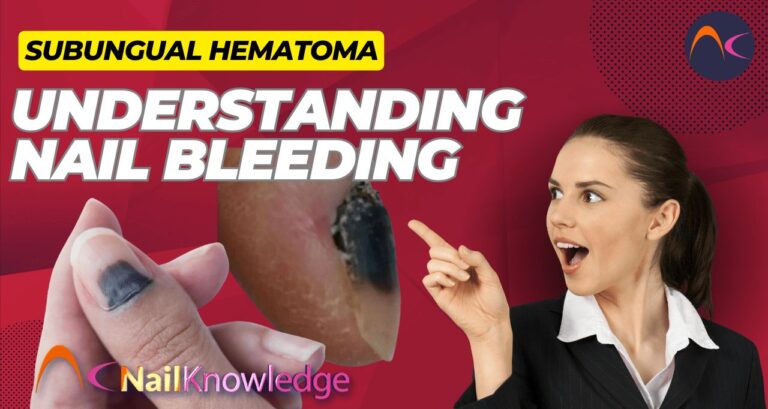
Subungual Hematoma – Bleeding Under the Nail

Subungual hematoma, also known as a bruised nail, is a medical condition that occurs when blood accumulates underneath the nail. It is usually caused by trauma to the fingertip, such as slamming it in a door, hitting it with a hammer, or even repetitive pressure on the nail. This article explores the definition, causes, symptoms, diagnosis, treatment options, and preventive measures, providing valuable insights into this common nail-related problem.

Definition of Subungual Hematoma

Also known as nail bed hemorrhage or bruised nail is a condition characterized by the accumulation of blood beneath the nail plate. The nail plate acts as a protective cover for the sensitive nail bed, and any injury to the fingertip can cause blood vessels to rupture, leading to blood pooling under the nail.

Subungual Hematoma brusied nail

Causes and Risk Factors of Subungual Hematoma

Subungual hematoma is often a result of sudden trauma to the fingertip. Activities such as jamming a finger, dropping a heavy object on the nail, or repetitive movements that stress the nail can all contribute to this condition. Athletes and individuals who engage in manual labor are particularly susceptible to subungual hematoma due to the nature of their activities.

Symptoms and Signs: Recognizing Discoloration and Pain

The most evident symptom of subungual hematoma is the discoloration of the affected nail. The nail may appear dark purple, black, or reddish-brown due to the trapped blood underneath. Additionally, individuals may experience throbbing pain, swelling around the nail, and tenderness when pressure is applied.

Diagnosing Subungual Hematoma

Identifying Nail Discoloration and Trauma History

In most cases, nail professionals can diagnose subungual hematoma through a physical examination. The characteristic discoloration of the nail and the history of trauma are usually sufficient for diagnosis. However, in some situations where there is uncertainty about the extent of the injury, imaging tests may be recommended.

Utilizing X-rays to Rule Out Underlying Conditions

Imaging tests, such as X-rays, can be utilized to rule out the presence of a fracture or other underlying conditions. X-rays can provide valuable information about the condition of the bone and soft tissues, ensuring that the diagnosis is accurate and any associated injuries are appropriately addressed.

Treatment Options

Promoting Healing and Alleviating Pain

For minor cases of subungual hematoma, home remedies and self-care can often promote healing. This includes elevating the affected finger to reduce swelling, applying ice packs to alleviate pain, and avoiding activities that may worsen the injury. It’s crucial to refrain from attempting to drain the blood from under the nail at home, as this can lead to infection and further complications. Keeping the nail clean & flexible, soap & water with a good quality oil will help alleviate pressure from the nail plate on the nail bed. The dried blood will grow out with the nail plate.

Medical Procedures for Nail Bleeding

In more severe cases, medical intervention may be necessary. A medical professional may create a small hole in the nail to drain the collected blood, relieving pressure and promoting healing. This procedure is known as nail trephination and should only be performed by a qualified healthcare provider. After this procedure its important to keep the nail clean, and free from infection.

Preventive Measures for Nail Bleeding

Tips to Reduce the Risk of Nail Trauma

To reduce the risk of subungual hematoma, individuals can take some precautionary measures. Wearing protective gloves during activities that involve potential finger injuries, such as sports and construction work, can provide a layer of protection. Additionally, taking breaks during repetitive tasks can help prevent trauma to the fingertips.

When to Seek Medical Attention

While many cases of subungual hematoma can be managed at home, it is essential to seek medical attention in certain situations. If the injury is accompanied by severe pain, excessive bleeding, signs of infection, or if there is uncertainty about the extent of the damage, it is best to consult a healthcare professional promptly.

Subungual Hematoma vs. Other Nail Conditions

Differentiating from Fungal Nail Infections and Melanoma

Subungual hematoma can sometimes be mistaken for other nail conditions due to similar symptoms. Understanding the distinguishing features of subungual hematoma can help differentiate it from other problems like fungal nail infections or melanoma.

Considering Medical History and Physical Examination

A healthcare professional can perform a differential diagnosis to accurately identify subungual hematoma and exclude other potential nail disorders. This process involves considering the patient’s medical history, physical examination, and sometimes laboratory tests to reach a precise diagnosis.

The Importance of Timely Intervention

Avoiding Permanent Nail Damage and Deformities

While subungual hematoma may seem like a minor injury, if left untreated, it can lead to complications. Prolonged pressure on the nail bed can cause permanent damage to the nail, leading to deformities or nail loss. In severe cases, the injury might extend to the bone, resulting in fractures.

Long-Term Effects

Timely intervention and appropriate treatment are essential to prevent long-term effects of subungual hematoma. By seeking medical attention promptly and following the recommended treatment plan, individuals can minimize the risk of complications and ensure a quicker recovery.

Safeguarding Nail Health and Well-Being from Nail Bleeding

Subungual hematoma is a common nail-related injury that can occur due to various factors. Understanding the causes, symptoms, and treatment options can help individuals take the necessary precautions and seek timely medical attention when needed. By being proactive in preventing finger injuries and addressing subungual hematoma promptly, individuals can protect their nail health and overall well-being.

FAQs

1. Can I drain the blood from under the nail at home?
Attempting to drain the blood at home can lead to infections and complications. It’s best to seek medical attention for proper treatment.

2. Is nail bleeding hematoma a severe condition?
While it is not typically life-threatening, untreated subungual hematoma can lead to long-term complications and should be addressed promptly.

3. What should I do if my nail doesn’t improve after home care?
If your nail condition worsens or fails to improve after home care, it’s essential to consult a healthcare professional for further evaluation and treatment.

4. Can I still participate in sports or physical activities with a subungual hematoma?
Engaging in physical activities with a nail bleeding can worsen the injury. It’s best to avoid such activities until the nail has healed completely.

5. Are there any preventive measures for subungual hematoma?
Yes, wearing protective gloves during activities that pose a risk of finger injuries and taking breaks during repetitive tasks can help prevent nail bleeding.

Filed Under: General Information, Nail Conditions

Acetone: What’s the Story?

The nail industry would be lost without acetone! It is the fastest and most efficient solvent remover for all nail coatings.

Understanding its Properties and Safety in Nail Care

Some people believe is an allergen (as they have experienced adverse skin reactions) but it is not an allergen. We know that the human body produces small quantities of acetone during metabolism. Some diabetic conditions produce larger quantities as do those on a keto diet.

It is, however, an irritant as it dries the skin faster than natural moisturisation and can be replaced when overused and after long skin contact.

It is a lot safer than alternatives used in ‘acetone free’ polish removers. These take considerable; y longer to remove coatings so result in much longer skin contact and therefore are more irritation. Acetone is a solvent as opposed to iso-propyl alcohol which is an alcohol. The two work well together as a nail plate cleanser as they remove different types of oils found on the nail plate.

The Versatility and Precautions of Acetone:

Understanding its Usage in Various Industries

It is used in many applications in a variety of industries. e.g. paints, and household cleaners It poses no significant danger to the environment except aquatic systems due to microbial consumption. There is no strong evidence of chronic health effects with normal and careful usage.

It is a very volatile chemical so evaporates quickly. It is unwise to have too much in a salon breathing environment but US regulators state that 1000 parts per million is the safety limit which is quite high, especially when the known alternative, ethyl acetate (used in acetone free removers) is only 400 PPM.

The most hazardous property of acetone is its extreme flammability so must be kept away from a naked flame and even electrical equipment as a flash point can occur!

Smart Buying

It is best to purchase from beauty wholesalers. This is because it will be suitable for cosmetic use and relatively pure. Bottles bought from other outlets is likely to be contaminated with other chemicals that could cause adverse skin reactions.

Proper Storage of Acetone

Storing acetone should be in its original container in a cool, dark place away from any electricity. When decanted into pumps for the nail desk make sure it had a lid and is kept away from direct sunlight where it could get too warm and therefore more volatile.

Best Practices for Acetone Usage

It is safer to use when wearing protective nitrile gloves to avoid any skin irritation. For the removal of coatings that need soaking, a small piece of cotton wool (about the same size of the nail) that has been soaked in acetone and placed on the nail then wrapped in foil is one of the safest methods as it avoids too much skin contact and reduces evaporation. If using a bowl method, the surrounding skin can be painted with a petroleum jelly product and the bowl covered with a towel.

Disposing of Acetone Safely

Spillages should be soaked up with disposable towels and placed in a metal bin with a lid and liner. This should be removed and double bagged and placed in the usual refuse arrangement. Do NOT tip down any sink as most water pipes are plastic and it will end up in natural water.

Larger quantities of used acetone should be collected by the local hazardous waste management system.

Don’t be afraid of acetone just understand how to use it safely and effectively.

Conclusion

Acetone plays a vital role in the nail industry as a fast and efficient solvent remover for various nail coatings. While some individuals may mistakenly believe it to be an allergen, it is essential to understand that it is not one, but rather an irritant when used excessively with prolonged skin contact.

Acetone stands out as a safer alternative compared to “acetone-free” polish removers, as it efficiently removes coatings, reducing the risk of extended skin contact and subsequent irritation.

Being aware of acetone’s volatile and highly flammable nature is crucial for safe usage. Proper storage in a cool, dark place away from electricity is recommended to maintain stability and avoid potential hazards.

To protect against skin irritation, users should opt for protective nitrile gloves while handling acetone. The article provides safe methods for usage, such as the effective soaking of cotton wool and wrapping it on the nail to minimise skin contact and evaporation.

Disposing responsibly is vital, with spillages collected in metal bins with lids and liners. Pouring down sinks must be avoided to prevent potential contamination of natural water sources. Larger quantities should be handled through local hazardous waste management systems.

For assured quality and purity, it is advisable to purchase acetone from reputable beauty wholesalers, ensuring its suitability for cosmetic use and reducing the risk of skin reactions from potentially contaminated sources.

In conclusion, with proper knowledge and adherence to safety practices, acetone can be a valuable asset in the nail industry, offering efficient and effective results while ensuring the well-being of both professionals and users alike.

FAQs

1. Is acetone an allergen, and can it cause skin reactions?
Acetone is not an allergen; however, it can be an irritant to the skin when overused or with prolonged contact. Some individuals may experience adverse skin reactions due to its drying effect. It’s essential to handle acetone with care and use protective measures, such as wearing nitrile gloves, to avoid skin irritation.

2. Why is acetone considered a safer option compared to “acetone-free” polish removers?
It is a preferred choice for nail coating removal due to its efficiency and quick action. Unlike “acetone-free” removers, which may take considerably longer to remove coatings, acetone reduces skin contact time, thereby minimizing irritation risks. It is essential to use responsibly and according to recommended guidelines.

3. How should acetone be safely stored and disposed of?
To ensure safety, acetone should be stored in its original container in a cool, dark place, away from electricity and direct sunlight. When decanted into pumps or containers, ensure they have a lid and are kept away from heat to reduce volatility. Spillages should be absorbed with disposable towels and disposed of in metal bins with lids and liners. Avoid pouring acetone down sinks, as it can contaminate natural water sources. Larger quantities should be handled through local hazardous waste management systems for proper disposal.

Filed Under: General Information, Health and Safety, Lotions, Potions and Polishes, Product Chemistry

What Oils are Best for Adding Moisture to Nails?


Also, are Different Oils Better for Hair or Skin?

Moisturizers are misunderstood. Contrary to what some may believe, oils can’t add any moisture to nails, skin or hair, but they can prevent “dryness”, so this causes some confusion.

The Role of Moisturizing and Water Concentration

When moisturizing is added, that increases “water” concentration inside nails, skin or hair. As you probably already know, water and oil don’t mix.

Anhydrous Nature of Cosmetic Oils and Emulsifiers

The water content of any cosmetic oil is nearly zero. They are considered “anhydrous” or “without water”. Oils and water can exist together in a cosmetic lotion or cream, but only if they are mixed with a special type of ingredient called an “emulsifier”. Emulsifiers are used to create many types of oil and water blends. Many foods, such as salad dressings, mayonnaise and ice cream are all made possible by emulsifiers and without them, these ingredients would quickly separate.

Moisture Content and Creams/Lotions

Creams and lotions can increase the moisture content of nails, skin or hair because they contain significant amounts of water as an ingredient. Oils by themselves can also increase the moisture content of nails and skin, but they do this in a different way than many understand. Oils coat the nails and skin with a thin film that forms a moisture resistant barrier.

Oils and Their Impact on Moisture Content

Some oils can penetrate and will create a barrier in the upper layers of the skin. Underneath this barrier, moisture can build up, thus raising the water content of nails or skin, but not for hair. Why? A steady supply of water travels from the nail bed to the nail plate surface, just as it does from the dermis to the skin’s outer surface.

Water Migration and TEWL

This water migration is slowed down by oils. Water migration through the epidermis is called “trans-epidermal water loss” or TEWL. Cosmetic scientists use special instruments to measure the TEWL to determine the effectiveness of skin lotions, creams and oils. Lower water loss (less water escaping from the skin) means a product is a more effective moisturizer.

Oils’ Effects on Nails, Skin, and Hair

This type of water migration doesn’t occur in a shaft of hair, so oils can’t moisturize the hair. Some oils provide additional benefits by increasing the flexibility in nails, skin or hair. As I explained in a previous question, nail oils add lubrication which allows the various layers to slide across each other, increasing flexibility. Oils also soften each of these to make their surfaces less hard. Some don’t penetrate at all, and remain on top of the skin. Those that sit on top of the skin are called “occlusive agents”.

Occlusive Agents and Moisture Retention

That term may sound like something out of a spy thriller, but the word “occlude” simply means “to block” or “obstruct”. Mineral oil is an “occlusive agent” which means it doesn’t penetrate; instead, it will sit on the skin to create a barrier that slows or blocks moisture evaporation.

Silicone oils can be occlusive agents as well.

Moisture Build-Up and Skin Plumping

The same type of moisture build-up would occur if you wrapped the skin in plastic wraps that keep foods fresh in the refrigerator. Occluding the skin causes moisture build-up, but we wouldn’t think of these plastic wraps as a skin moisturizer, even though they increase the level of moisture in the skin.

Increased water content can also function to soften and improve skin flexibility and can also cause plumping. Of course, the same happens in the nail plate, but to a lesser degree and the reverse happens as well.

Oils and Blocking Excessive Water Penetration

Oils can also block the penetration of excessive amounts of water from the outside into nails, hair or skin and keep them from becoming over-saturated with water molecules.

Conclusion

Understanding the role of oils in moisturization is crucial for maintaining healthy nails, skin, and hair. While oils themselves cannot add moisture, they play a significant role in preventing dryness by creating a protective barrier. Oils differ in their ability to penetrate and create barriers, with some oils offering additional benefits like increased flexibility.

It’s important to note that water and oil do not mix, and the water content of cosmetic oils is minimal. Creams and lotions, on the other hand, contain significant amounts of water, making them effective at increasing moisture content.

Furthermore, the concept of occlusive agents, such as mineral oil and silicone oils, should be understood. These agents form a barrier on the skin’s surface, slowing down moisture evaporation and enhancing softness and plumping effects. However, they should not be mistaken for traditional moisturizers.

By grasping the distinctions between oils, creams, and occlusive agents, we can make informed choices about the best products to support our nail, skin, and hair health. Remember to consider the unique properties of each and choose accordingly to maintain optimal moisture levels and overall well-being.

FAQs

  1. Can oils add moisture to nails, skin, or hair?
    No, oils cannot add moisture to nails, skin, or hair. However, they can prevent dryness by forming a barrier that retains moisture.
  2. Can different oils have varying effects on the skin compared to hair?
    Yes, different oils can have varying effects on the skin compared to hair. While oils can increase moisture content and provide benefits for nails and skin, they do not have the same moisturizing effect on hair.
  3. What are occlusive agents, and how do they impact moisture retention?
    Occlusive agents are substances that create a barrier on the skin’s surface, preventing moisture evaporation. Examples include mineral oil and silicone oils. They can help retain moisture and improve skin flexibility, but they should not be confused with traditional skin moisturizers.

Filed Under: General Information, Nail Conditions

Why do Nail Plates Snap off at the Free Edge Rather than Split?

Internal Structure of Nail Cells and the Arrangement of Keratin Fibrils

There are many reinforcing bonds holding nails cells together. These form randomly in all directions, so it would be expected that the plate would be equally resistant to cracking in all directions. Clearly, that is not the case. The nail plate is highly prone to breaking in one direction, across the width of the plate as shown in the banner Image (above). Only in an unusual circumstance does a break or split occur down the length of the plate. The reason for this is the internal structure of each nail cell.

Crack Propagation and the Role of Keratin Fibril Arrangement

Keratin fibrils inside a nail plate cell at high magnifications.

Each nail cell is filled with many short strands of keratin called “fibrils” and they have the appearance of tiny fibers. These fibers aren’t randomly distributed, but instead are uniformly stacked into neat piles, much like logs of wood are stacked. These stacks of fibrils lay across the width of the nail plate with their ends pointing toward the sidewalls (see image above). This arrangement makes it much easier for a crack to travel between the fibrils, rather than across or through them. This keratin fiber arrangement leads the cracks to turn toward the sidewalls and prevents cracks from spreading down the length of the plate.

Preventing Catastrophic Injuries: How Nail Plates Protect Themselves

Cracks move like water flowing downhill; they take the path of least resistance. This helps to prevent the nail plate from splitting open to expose the underlying nail bed. In this way, the nail plate protects itself from catastrophic injuries that can lead to serious infections. The plate can split down its length, but when it does, often the crack follows a deep groove that formed in the nail plate.

Conclusion

The unique internal structure of nail cells and the arrangement of keratin fibrils play a crucial role in the way nail plates break or snap off.

The presence of reinforcing bonds in random directions would suggest equal resistance to cracking in all directions, but that is not the case.

The stacks of fibrils across the width of the nail plate create an organized structure that allows cracks to travel between the fibrils rather than across or through them. This arrangement directs cracks towards the sidewalls, preventing them from spreading down the length of the plate.

By following the path of least resistance, the nail plate safeguards itself from catastrophic injuries that could lead to severe infections. Although the plate can still split down its length, it often does so along a deep groove that has formed, further protecting the underlying nail bed.

Understanding the internal structure of nail cells sheds light on the remarkable ability of nail plates to withstand forces and maintain their integrity.

FAQ’s

Q: Why do nail plates snap off at the free edge rather than splitting?
A: Nail plates primarily snap off at the free edge due to the unique internal structure of nail cells. The arrangement of keratin fibrils, stacked across the width of the nail plate, creates a path of least resistance for cracks to travel between the fibrils rather than across or through them. This directed crack propagation towards the sidewalls prevents splitting along the length of the plate.

Q: How does the internal structure of nail cells contribute to their strength?
A: The internal structure of nail cells plays a significant role in the strength of nail plates. The presence of reinforcing bonds that form randomly in all directions provides overall resistance to cracking. However, the organized arrangement of keratin fibrils, resembling stacked logs of wood, further enhances this strength. By uniformly stacking the fibrils across the width of the nail plate, cracks are more likely to follow the path between the fibrils rather than across them, thereby maintaining the plate’s integrity.

Q: Can nail plate splitting lead to serious infections?
A: Yes, nail plate splitting can potentially lead to serious infections. However, it is important to note that nail plates have mechanisms in place to protect themselves from such catastrophic injuries. When splitting does occur, it often follows a deep groove that has formed in the nail plate, minimizing the exposure of the underlying nail bed. This protective measure helps reduce the risk of infections. Nevertheless, it is essential to maintain proper nail hygiene and promptly address any splits or injuries to prevent complications.

Filed Under: General Information, Nail Conditions

  • « Go to Previous Page
  • Page 1
  • Interim pages omitted …
  • Page 15
  • Page 16
  • Page 17
  • Page 18
  • Page 19
  • Interim pages omitted …
  • Page 30
  • Go to Next Page »

Level Up Your Nail Insights

Join our Newsletter!
SUBSCRIBE...

Copyright © NailKnowledge

NailKnowledge

  • eBooks
  • About us
  • Courses
  • News
  • Blog
  • Newsletter
  • Glossary

Policies

  • Privacy Page
  • Terms & Conditions
  • Cookie Policy

Support

  • Contact Us
  • Ask the Experts
  • System Support
  • FAQs
English
English
Portuguese Spanish Vietnamese