• Skip to primary navigation
  • Skip to main content
  • Skip to footer
NailKnowledge

NailKnowledge

  • Courses
  • MyNailEra
  • Free eBooks
  • Knowledge Base
    • Knowledge Base
    • Ask the Experts
    • Glossary
  • News
  • Blog
  • Login

Nail Services

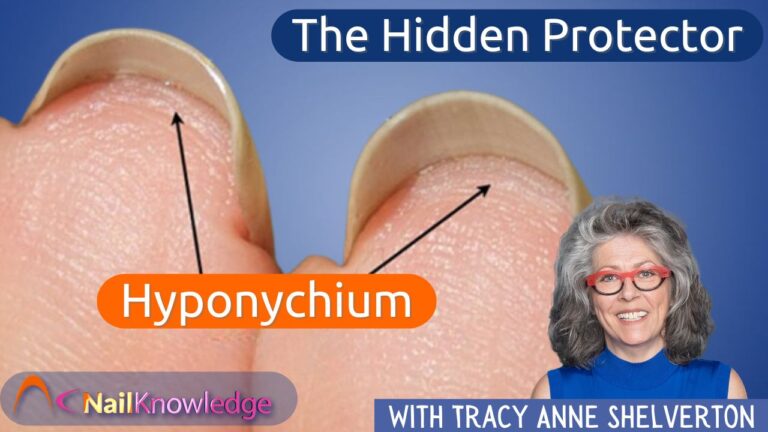
Why Nail Professionals Should Focus on the Hyponychium

The Hidden Protector

As a nail professional, you know the importance of keeping nails looking flawless, but how often do we really talk about the hyponychium? It might not be the most glamorous part of the nail, but it’s one of the most crucial. If you’ve been overlooking it, now’s the time to change that. Let’s investigate why the hyponychium deserves your attention and how understanding it can elevate your nail care skills to a whole new level.

What Exactly Is the Hyponychium?

The hyponychium is the area of skin right under the free edge of the nail plate—the part of the nail that extends past the fingertip. Think of it as the gatekeeper of the nail unit, forming a seal that keeps harmful bacteria, pathogens, and allergens out. It might look small and simple, but it plays a big role in keeping the sensitive areas of the nail bed and matrix protected. Neglecting this area could leave your clients vulnerable to infections or other nail issues, which brings us to our next point.

Why Should Nail Techs Care About the Hyponychium?

As nail professionals, your clients rely on you to not only make their nails look great but also to keep them healthy. The hyponychium is packed with nerve endings—sort of like a security system for the nail. If this protective seal is broken, those nerve endings kick into gear, alerting the body with discomfort or pain. This should be your first clue that something isn’t right. A compromised hyponychium can open the door for bacteria, fungal infections, and even onycholysis (when the nail plate starts separating from the nail bed).

In short: a healthy hyponychium means happy, healthy nails. And that means happy clients.

Signs the Hyponychium Needs Attention

As a nail tech, knowing the signs of hyponychium issues can prevent bigger problems down the line. Here are a few things to look out for:

  • Thickening or Discoloration: If the hyponychium starts to thicken or change color, it could be a sign of an infection. If a fungal infection is suspected, test to know for sure and treat accordingly.
  • Pain or Discomfort: Your client mentions sensitivity or pain around the free edge—this could indicate that the seal has been compromised.
  • Onycholysis: If you notice the nail lifting from the nail bed, that’s a major red flag. This condition often stems from a damaged hyponychium and can lead to a more serious infection if not addressed.

The Impact of Hyponychium on Nail Health

If the hyponychium is compromised, it doesn’t just affect the appearance of the nails—it can cause real health concerns for your client. Infections can develop, and untreated issues can even lead to long-term damage to the nail matrix. You don’t want that for your clients, and they don’t want to deal with it either.

So how do you protect this important area? Gentle handling of the nails is key. Over-filing the free edge or using tools too aggressively can damage the hyponychium. Also, make sure to encourage your clients to avoid bad habits like nail-picking, which can break the seal and invite infection.

Good Nail Hygiene is your Best Defense.

Here’s what you can do as a nail professional to maintain a strong and healthy hyponychium for your clients:

  1. Gentle Filing: When shaping nails, avoid over-filing near the free edge to protect the hyponychium.
  2. Clean but Careful: Keep the nail area clean, but avoid poking or pushing too hard on the hyponychium.
  3. Watch for Signs of Infection: Always be on the lookout for discoloration, thickening, or signs of discomfort.
  4. Educate Clients: Teach your clients about the importance of the hyponychium and proper nail care routines to keep this area intact.
  5. Nail Unit Maintenance: When applying oil, do so at the back side of the free edge, this way the oil first soaks around the hyponychium before it makes its way along the lateral nail folds to the PNF.

Final Thoughts: Don’t Overlook the Hyponychium

As a nail professional, your expertise goes beyond just aesthetics—your job is to protect the health of your clients’ nails. The hyponychium may be hidden, but it plays a critical role in nail health. By giving this small but mighty structure the attention it deserves, you’re ensuring your clients not only walk away with beautiful nails but with nails that are strong and healthy from the inside out.

So, next time you’re prepping a client’s nails, take a moment to think about the hyponychium.

It’s not just another part of the nail—it’s the silent protector that makes all the difference.

Filed Under: General Information, Nail Services

The Essential Role of Water and Oil in Nail Health

Nail health isn’t just about aesthetics—it is about strength and resilience. At the core of healthy nails are two critical elements: water and natural oils. These two factors work together to maintain the structure and flexibility of your nails. However, when their balance is off, your nails can suffer from dryness, fragility, and an overall lack of shine.

How Water Travels Through Your Nails and Impacts Nail Health

Water moves through your nails in an interesting way. Tiny diffusion channels carry water from the nail bed all the way to the nail plate, where it eventually evaporates away. This constant movement of water is crucial to keeping your nails flexible and able to withstand pressure. When nails are adequately hydrated, they bend without breaking. However, if the water content is too low, nails become brittle, fragile, and prone to cracking.

On the flip side, too much exposure to water will soften the nail, making it swell and increasing the risk of damage. Have you ever noticed your nails feeling weak after soaking in a bath or swimming for too long? That’s why prolonged contact with water can actually do more harm than good.

Why Natural Oils are Essential for Nail Health and Shine

Natural oils play an equally important role in keeping your nails healthy. Produced by your body, these oils are key to locking in moisture and preventing excessive evaporation. They form a barrier that helps your nails retain hydration, ensuring they stay strong and flexible. 

Without these oils, nails lose their ability to hold moisture, leading to dehydration. Furthermore, oils are responsible for the shine on your nail surface. A well-oiled nail has a natural glow that looks smooth and healthy, reflecting light and giving it that polished appearance we all strive for. Commonly, nail professionals describe these nail types as ‘oily’ or even ‘juicy’ and make a heightened effort to remove this lustre in an attempt to increase the adhesion of nail coatings.

What Happens when Water and Oil are out of Sync?

When there’s an imbalance between water and oils, things start to go wrong. Too little of either, and your nails can become dehydrated, particularly on the surface. This leads to issues like splitting and a lifeless appearance. The layers of the nail plate may begin to separate, a disorder called Lamellar Dystrophy, and/or white patches may even appear while becoming rough in texture. This dullness is more than a cosmetic issue; it signals that your nails aren’t receiving the moisture and oil they need to stay healthy.

The Consequences of Dehydration

Dehydrated nails are a clear sign that something is off. Fragility is one of the first signs—dehydrated nails lack the flexibility they need to handle everyday tasks. A simple knock or even typing on a keyboard can cause them to chip or crack, especially those low-level, painful, side splits. Should your nails endure nail coatings regularly, despite common myths, dehydration can be managed and hydration maintained with correct nail technician practices and strict aftercare being followed. 

Achieving the Perfect Balance

Maintaining healthy nails requires achieving the right balance between water and oils. Here are some steps you can take to achieve this:

  • Moisturise Regularly: Using nail oils or conditioners rich in ingredients like almond oil, jojoba oil and Vitamin E can help replenish lost oils, and penetrate deep into the nail plate, keeping nails hydrated and impact-resistant.
  • Limit Water Exposure: Protect your nails from excessive water by wearing gloves when doing dishes and regularly applying nail oil to promote a water-resistant barrier, minimising water absorption.
  • Avoid Harsh Chemicals: Many nail products and household cleaners can strip nails of their natural oils. So again, use gloves and nail oils to protect the nails, promoting ultimate nail health. 
  • Support From Within: Lifestyles, health conditions and disorders are always important to consider when assessing the nails condition. A healthy diet can also help maintain nail strength. Biotin, zinc, and omega-3 fatty acids are all key nutrients that contribute to nail health. 

Nail Health Secrets: Balancing Water and Oils for Strong, Shiny Nails

Healthy nails are all about balance – getting the right mix of hydration and natural oils is the key to keeping them looking and feeling their best. These natural properties work hand in hand to keep your nails healthy, flexible, and shiny. Water provides essential moisture, while oils lock in that hydration and give nails their natural smooth and polished appearance. With proper care, your nails will remain strong, shiny, and ready to face daily life. In this great condition, they will also live harmoniously with any chosen nail coatings and treatments resulting in a happy Nail Technician and a very happy client! 

Filed Under: Health and Safety, Nail Services

Understand Seven Important Properties of Natural and Artificial Nails – Part 1 Strength

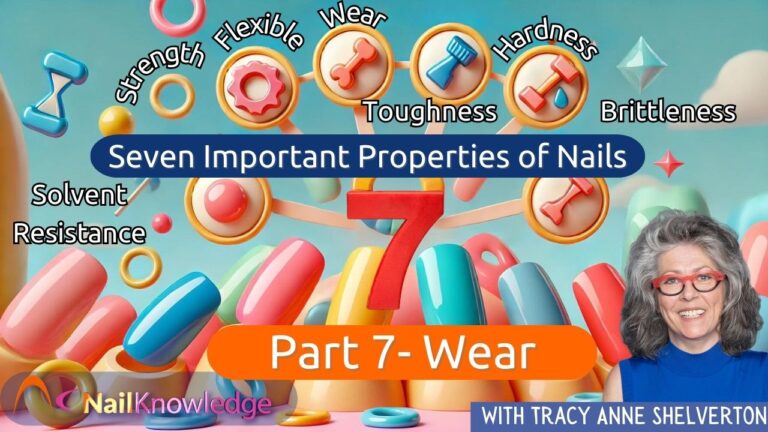
There are seven important properties of natural and artificial nails that are often responsible for how your nails will behave in real-world situations.

These seven key properties, strength, hardness, flexibility, toughness, brittleness, solvent resistance, and wear are crucial for understanding how both natural and artificial nails perform and behave.

Interestingly, these same properties apply to both natural and artificial nail coatings. For instance, if a client snags their natural or artificial nail on something, how will that nail respond? Will it tear or crack or will it resist being damaged?

This often depends on one or more of these important properties. Let’s review them, so you can have a deeper understanding of how these properties can affect all types of nails.

Properly understanding these properties will help everyone, from nail enthusiasts to professionals, make better choices for nail care and maintenance.

Understanding Nail Strength: The First Key Property of Natural and Artificial Nails

  1. Strength – What is Strength?

We use the word all the time in many ways; everything from the strength of a person’s character to muscle strength training; but nails don’t have muscles.

Of course, they certainly can have lots of character as any fan of nail art knows and they can certainly be strong, in fact they can be too strong, even dangerously strong!

Strength is defined as the ability of a material to “resist breaking under the stress of a heavy load or impact”. Bridges are good examples. They must be strong enough to hold all the crossing cars. In this case, the cars are the heavy load.

Drop a wine glass on a ceramic tile floor and it will not have the strength to resist the impact. For the same reason, a hard-ceramic tile will break if a heavy frying pan were dropped. The strength of a tree branch allows it to resist the extra load created during heavy wind.  Our muscles must be strong enough to resist tearing apart when moving heavy loads. The strength of hair allows it to resist breakage while being brushed.

Why Nail Plates Need Strength—But Not Too Much

Why do nail plates need to be strong?  That is because we use them like tools. All the bending, picking, prying, poking, scratching and clawing we do with our nails is proof of their strength. 

Strength isn’t the only property that nail plates must possess. There are several other important properties to consider. Would you want nails like titanium alloy? It is very strong, but we don’t want or need our nail plates to be that strong. Not so strong that the nail plate would rip away from the nail bed and matrix area if caught on something.  It would be better if it broke instead, since the alternative would not be fun or pleasant and could cause serious, possibly irreversible damage to the nail bed and matrix.  Also, if client’s nails were that hard and inflexible, they could poke out someone’s eye, maybe their own!

Of course, we want strong nails, but not quite that strong. Right?

It is important for the nail plate to break under certain conditions, so they must not be too strong. Nail plates are designed to break at some point before more serious, potentially permanent damage can occur.

The Issue with MMA: Why It’s Too Strong for Artificial Nails

This is one of the problems of the use of methyl methacrylate monomer (MMA), which is sometimes used as an ingredient in certain monomer liquid and polymer powder (L&P) formulations. MMA is too strong. Rather than break when impacted, the force will cause the natural nail to crack, rather than the artificial nail coating.

In other words, an MMA nail coating is too strong to function properly as an artificial nail. There are other problems with the properties of MMA that make it an undesirable ingredient for artificial nails which are discuss in this blog post MMA and the Nail Industry.

Explore More Key Properties of Nails in Our 7-Part Series:

  • Nail Strength – Discover how the strength of nails impacts their performance and durability.
  • Nail Hardness – Understand the crucial role of hardness in nail health and how to maintain the perfect balance.
  • Nail Flexibility – Understand the importance of flexibility in preventing nail breakage and maintaining resilience.
  • Nail Toughness – Find out what makes nails tough and how this property differs from strength and hardness.
  • Nail Brittleness – Learn what causes brittleness in nails and how to prevent it.
  • Nail Solvent Resistance – Explore how nails can resist damage from chemicals and solvents.
  • Nail Wear – Understand the factors that affect how well nails withstand regular use and environmental exposure.

Filed Under: General Information, Nail Services

The Danger of Misinformation in the Nail Industry

In today’s nail industry, misinformation is an increasing concern that affects both professionals and clients alike. Misguided practices not only lead to poor results but can also pose serious health risks. Now, more than ever, nail technicians need to rely on scientific evidence and reliable sources to ensure the safety and effectiveness of their treatments.

How Misinformation Spreads in the Nail Industry

In many countries around the world, including Chile, where I am from, inaccurate information is often passed on through influencers or trainers who lack a solid scientific foundation. These individuals, with large followings, unknowingly perpetuate myths and misguided techniques that harm rather than help. Instead of following verified research, many professionals rely on outdated or unsubstantiated claims, contributing to widespread misinformation.

Global Impact of Nail Industry Myths

This isn’t an issue isolated to a single region—misinformation in the nail industry has become a global problem. With the internet and social media playing such a dominant role in how information is shared, nail professionals across the world are exposed to misconceptions. Whether it’s improper application techniques, the use of harmful products, or following unverified trends, these practices can compromise the safety of clients.

The Consequences of Following False Information

The impact of following inaccurate information can be serious. Using unsafe products or techniques can lead to issues like allergic reactions, infections, and long-term damage to the nails or skin. Beyond physical harm, the reputation of the professional and the broader nail industry suffers when clients are subjected to unsafe or ineffective treatments.

The Responsibility of Nail Professionals

To combat the spread of misinformation, it’s critical that nail professionals commit to continuous education. By seeking out evidence-based information and verifying facts with reliable, scientific sources, professionals can ensure they are offering safe and effective treatments. Consulting accredited educational platforms, industry publications, and attending certified workshops can help improve the standard of care within the industry.

A Call for a More Informed Industry

The responsibility to stop the cycle of misinformation lies with everyone in the nail industry.

By questioning information, doing thorough research, and sharing knowledge grounded in science, we can all contribute to a safer, more informed nail care community.

Only by prioritizing facts over myths can we move toward a more professional and reliable industry that always puts client safety first and we only achieve that if we all work together.

Filed Under: General Information, Nail Services

TPO Ban: What Nail Professionals Need to Know

You may have heard about the upcoming ban on TPO in nail coating products. But what does this mean for nail professionals?

Regulatory Update (UK 2026)

This article has been updated to reflect the confirmed UK regulatory timeline for Trimethylbenzoyl Diphenylphosphine Oxide (TPO). Under amendments to the UK Cosmetics Regulation, products containing TPO will no longer be permitted to be newly placed on the Great Britain market from 15 August 2026, with a further deadline of 15 February 2027, after which non-compliant products can no longer be made available for sale. These changes apply to cosmetic nail products supplied in both professional and retail settings.

Health Risks of TPO and the Upcoming Ban on UV-Cured Nail Coatings

TPO, short for Trimethylbenzoyl Diphenylphosphine Oxide, is a photo initiator commonly used in UV-cured nail coatings. However, the European Commission has classified TPO as a potential health hazard if present in the body in sufficient quantities.

Starting in September 2025, it will be illegal to include this ingredient in cosmetic nail products across Europe, with the UK implementing similar restrictions from 15 August 2026, followed by a sell-through period allowing existing stock already supplied to the market to remain available until 15 February 2027. This ban applies to the manufacture and sale of new products, not to the use of existing ones.

In cosmetic regulatory terms, this means products containing TPO cannot be newly supplied or imported after the deadline dates. Nail professionals and retailers are not expected to immediately dispose of existing stock purchased before the restriction takes effect.

Reformulation Efforts and Alternatives to TPO in Nail Products

Many reputable brands have already addressed this issue by reformulating their products to exclude TPO. There are several alternative photo initiators that provide similar results, ensuring that the performance of nail products is not compromised.

Safe Use of TPO in Nail Services Until the Ban Takes Effect

It is important to note that this regulatory change does not represent a ban on gel nail products themselves. TPO is one of several photoinitiators used within UV and LED curing systems, and alternative ingredients are already widely available. The restriction reflects an updated regulatory classification rather than evidence that professionally used nail gel products suddenly pose a new safety risk.

For nail professionals, it’s important to know that you can still safely use products containing TPO until the ban takes effect. The levels of TPO used in nail services are far below those considered harmful.

Ensuring Brand Compliance and Client Safety in the Transition to TPO-Free Products

It’s a good idea to check with your brand about their plans regarding this new legislation. If your brand has not yet moved to TPO-free products, it might be time to reconsider your options.

There’s no need to worry your clients if you need to switch brands. Cosmetic ingredients are regularly reviewed to ensure safety, and your existing gel polishes will continue to be safe to use during the transition period.

Doug Schoon on TPO Removal: Industry Impact and Safety Considerations

Doug Schoon, a respected scientist in the industry and expert at NailKnowledge, explains that removing TPO from nail products won’t necessarily affect their performance, though reformulation will be required. He notes that TPO can cause skin sensitisation or allergic reactions if not used properly, especially if skin contact isn’t avoided. However, when applied correctly by trained professionals, adverse effects are rare.

Schoon points out that most concerns about TPO stem from its use in non-nail-related industries, such as manufacturing printing inks and industrial adhesives. The decision to remove TPO from nail coatings isn’t due to issues with the nail products themselves, but rather as a precautionary measure for consumer safety.

He advises that brands can facilitate this transition by reformulating products with safer photo initiators, offering education on the proper application techniques for new formulas, and clearly labeling TPO-free options. Many nail brands are likely already working on or have launched alternatives to TPO that perform similarly. Nail professionals should proactively engage with their product suppliers to understand these changes, especially since clients may inquire about the safety and application methods of the new formulations.

Understanding the TPO Ban and Cosmetic Safety Classification

The restriction follows the classification of TPO as a CMR Category 1B substance under European chemical legislation. Under cosmetic regulations, ingredients receiving this classification are automatically prohibited for precautionary reasons, even where normal cosmetic exposure levels are considered low. This regulatory mechanism is applied across many cosmetic ingredient reviews and does not indicate that compliant nail services performed using approved products are unsafe.

Preparing for the TPO Ban: Guidance for Nail Professionals and Brands

As the transition progresses, nail professionals are encouraged to contact their product manufacturers or distributors to confirm reformulation timelines and future compliance. Many brands have already introduced TPO-free systems, and further updates are expected across the industry ahead of the 2026 and 2027 deadlines. Staying informed and planning ahead will help ensure continued compliance without disruption to salon services.

Filed Under: General Information, Health and Safety, Nail Services

Langerhans Cells Protect Your Clients Skin During Nail Treatment

As a nail technician, you’ve probably encountered situations where products like polish or acrylics accidentally leak onto the skin around the nail. While this might seem like a small mishap, there’s a lot more happening beneath the surface of the skin than meets the eye. In fact, your bodies have their own natural defenders working hard to protect us from harm, meet the Langerhans cells, the unsung heroes of the immune system.

What Are Langerhans Cells?

Langerhans cells are like the security guards of the skin, always on patrol and ready to defend against anything that shouldn’t be there. Found in the outermost layer of the skin (the epidermis), including the delicate area around the nails, these cells are essential to keeping our  skin healthy.

So, what exactly do these tiny guardians do? Their main job is to detect harmful substances like bacteria, viruses, or even chemical irritants that may have entered the skin. Once they spot a threat, they capture it and alert the rest of the immune system to respond. Think of them as the first line of defense, always ready to call for backup when needed.

Why Nail Technicians Should Care

As a nail technician, understanding the role of Langerhans cells can help you better care for yourself and your clients. When a product leaks onto the skin, or a nail plate has been so thinned out by filing it can reach the nail bed where these cells are stationed. If the Langerhans cells detect something harmful, they spring into action. This might result in redness, swelling, that could eventually trigger an allergic reaction as the immune system works to protect the skin and no one wants that so its smart to pay attention and avoid that.

For example, let’s say a bit of gel polish accidentally seeps onto the skin, gets under the nail or even leaks into the nail bed. The Langerhans cells might recognize some of the chemicals in the polish as foreign or irritating. In response, they activate, leading to an inflammatory reaction. While this is a natural and protective response, it’s not pleasant, as it can cause discomfort and spoil the beautiful work you’ve just done.

Practical Tips for Nail Technicians

To minimize the chances of product leakage and the resulting immune response, here are a few practical tips:

  1. Use Precise Application Techniques: Be mindful of the amount of product you’re using, especially near the proximal nail fold and sidewalls of the nails. Consider using a smaller brush for detailed work to avoid accidental spills.
  2. Protect the Skin: Apply a barrier cream around the nails before starting your service. This can help prevent products from seeping into the skin.
  3. Clean Up Immediately: If any product does get on the skin, wipe it away as quickly as possible. The less time it has to sit on the skin, the lower the risk of triggering an immune response.
  4. Be Aware of Client Sensitivities: Some clients may have more sensitive skin than others. Knowing this can help you choose gentler products or adjust your application technique to avoid any issues.
  5. Stop thinning the nail plate: Removing the protection layers of the nail plate not only upsets the balance of the nail enhancement that you are creating but also opens the nail for invading pathogens or product leakage

Communicating with Clients

If a client does experience redness or irritation, it’s important to communicate with them clearly and calmly. Here’s a simple way to explain what’s happening:
“Your skin has these amazing cells called Langerhans cells that act like security guards. When something they don’t like, like a little bit of product gets on your skin, they might react by causing some redness or swelling. It’s just your body’s way of protecting you.”

By explaining the situation in this way, you can reassure your client that what they’re experiencing is a normal reaction and that you’re aware of how to handle it.

Understanding Langerhans Cells: Key to Healthy Skin and Safe Nail Care

Langerhans cells may be tiny, but their role in protecting your clients’ skin is huge. By understanding how these cells work, you can take steps to prevent product leakage and ensure that your clients leave your salon with not only beautiful nails but also healthy skin.

Next time you’re working on a client, remember these guardians of the nail, and use your knowledge to provide the best care possible. Your clients will thank you for it!

Filed Under: Nail Conditions, Nail Services, Nail Technology

  • « Go to Previous Page
  • Page 1
  • Page 2
  • Page 3
  • Page 4
  • Page 5
  • Page 6
  • Interim pages omitted …
  • Page 22
  • Go to Next Page »

Level Up Your Nail Insights

Join our Newsletter!
SUBSCRIBE...

Copyright © NailKnowledge

NailKnowledge

  • MyNailEra
  • eBooks
  • About us
  • Courses
  • News
  • Blog
  • Newsletter
  • Glossary

Policies

  • Privacy Page
  • Terms & Conditions
  • Cookie Policy

Support

  • Contact Us
  • Meet the Experts
  • Ask the Experts
  • System Support
  • FAQs
English
English
Portuguese Spanish Vietnamese