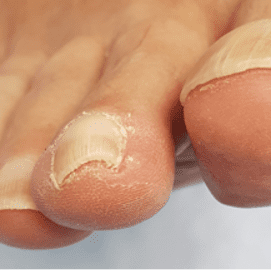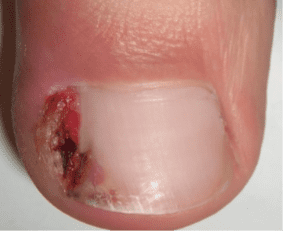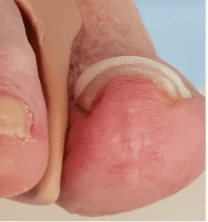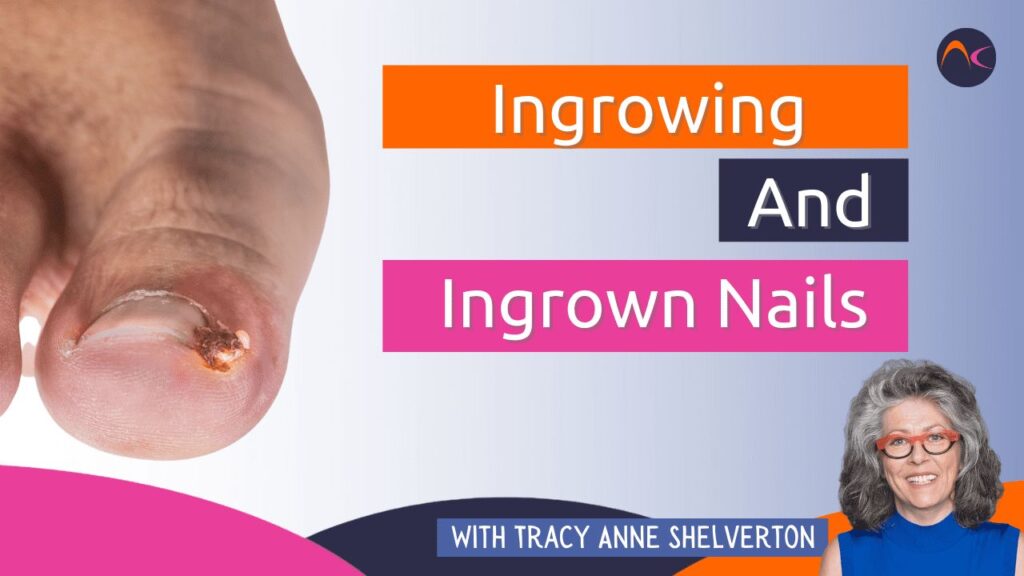
First, we must define the difference between ingrowing and ingrown nails, as the treatment is not always the same for both.
*It’s important to note that we only work on open wounds after an MD has approved or recommended the client or patient to us, and doing so with success prevents painful invasive surgery.
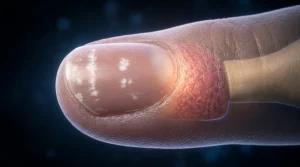
Ingrowing nails are caused by changes in the curvature of the natural nail plate, splintering of the lateral nail plate, or changes in the nail unit skin structure. That is the root cause for ingrowing nails. Ingrown nails are caused by ignoring or not properly treating ingrowing nails.
When it comes to ingrowing or ingrown nails, we usually think of toenail problems in the feet. When we mention toenail problems or nail problems, we turn into strange beings. ‘Cover up’ is the name of the game, with ‘denial’ being our best friend. However, when we really think about it, we see that sometimes situations occur that we have no control over.
We also tend to be embarrassed about foot infections of any kind and, therefore, we tend to act too slowly.
In the real world where most of us live, there comes a moment in time when you can’t reach your feet to take care of them. Or maybe life just got in the way. You find yourself suddenly living alone when your partner always took care of your feet. Or you broke your hip, and there is no way for the next 6 months you are coming anywhere close to being able to take care of your feet. Or maybe you got some kind of fungal infection at the swimming pool, and you are too embarrassed to let anyone see it…. And that’s where the story begins.


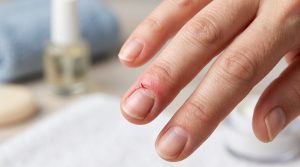
With fingernails, we tend to act sooner. However, we do not always do it in the right manner, causing a recurrence of the problem. Hangnails are a perfect example of nail plate problems in the lateral nail fold that is so common yet, somehow, we choose an inadequate solution like cutting it away with a sharp tool causing the problem to reoccur. Good maintenance of the nail unit, and regular use of cuticle oil and lotion, are important to help prevent reoccurrence.
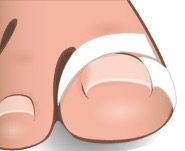
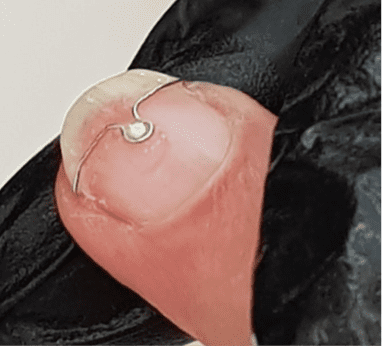
We can temporarily help with nail unit taping – this will not solve the problem. Or we can use a nail brace or composite resin to relieve the problem.
General reasons for ingrowing or ingrown nails are:
- Incorrectly cut nails
- Cutting or tearing the corner of the nail
- Mechanical thinning of the nail plate
- Mechanical removal of the lateral nail fold
- Improperly fitting shoes
- Trauma
- Changes to the Distal Phalanx
- Infection
- Disease
- Lichen planus
- Alopecia areata
- Psoriasis
- Diabetes
- Arthritis
- Some chemotherapies
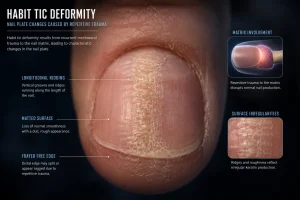
It can be that the nail plate structure has been compromised by overfilling, causing the nail plate structure to collapse or splintering of the nail plate in the lateral nail folds (we see this more often in fingernails). It can also be that the structure of the nail plate has been compromised by an accident, or even biting of the nail plate or lateral nail folds.
Cutting out the corner of an ingrowing nail may give instant relief for about 30 seconds. Then, an infection will generally be the result. When we do this, we forget that the nail plate is in continuous movement 24/7. This causes the cut edge of the nail plate to dig into the paronychium cup causing even more problems.
Not being able to maintain hand/foot is an added complication. Proper education and training are essential to correctly applying handmade braces or composite resin to correct ingrown or ingrowing nail plates. But it will prevent invasive and painful surgery 8/10 times.