Vai trò của Hyponychium trong việc bảo vệ móng tay
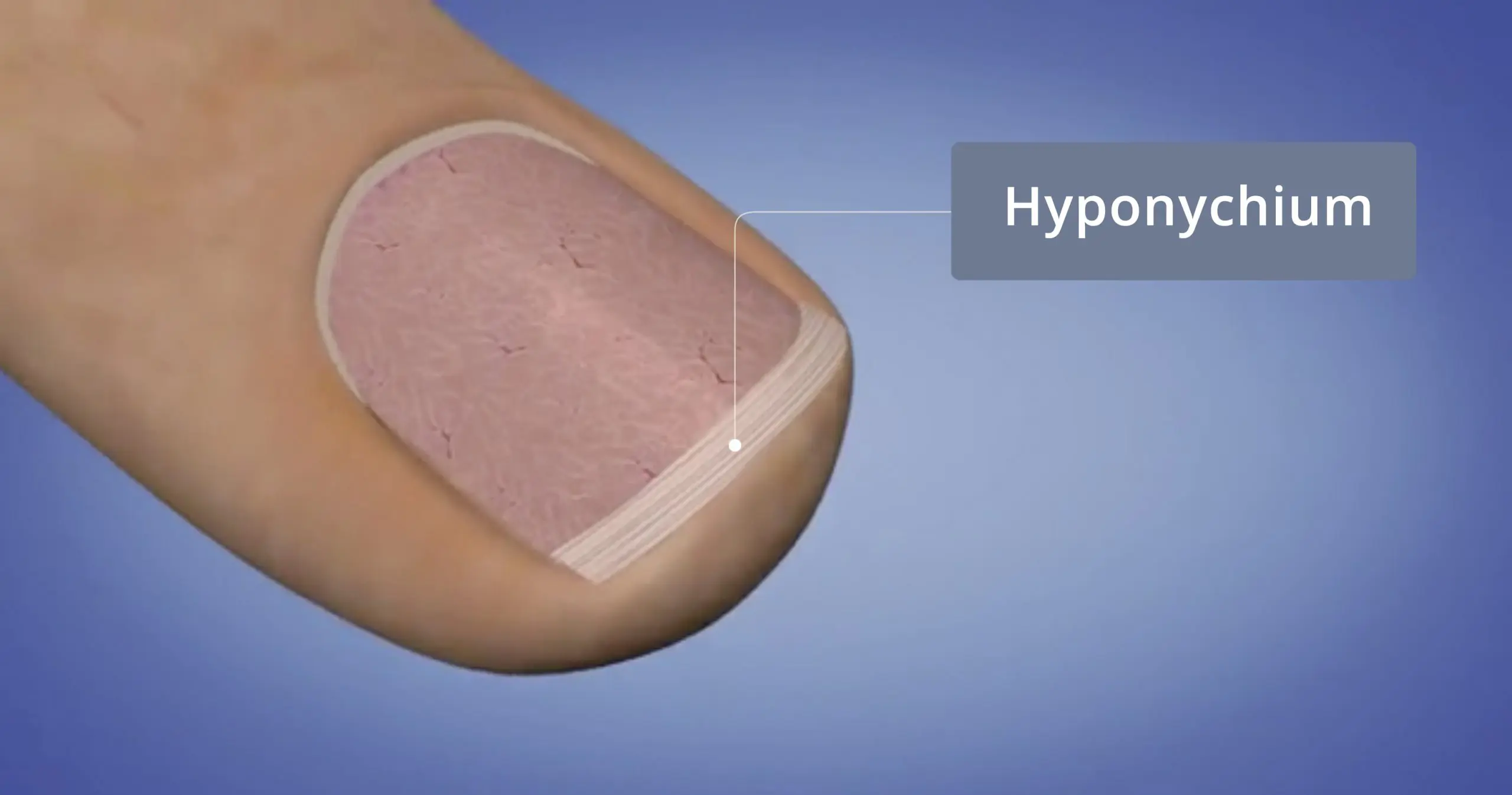
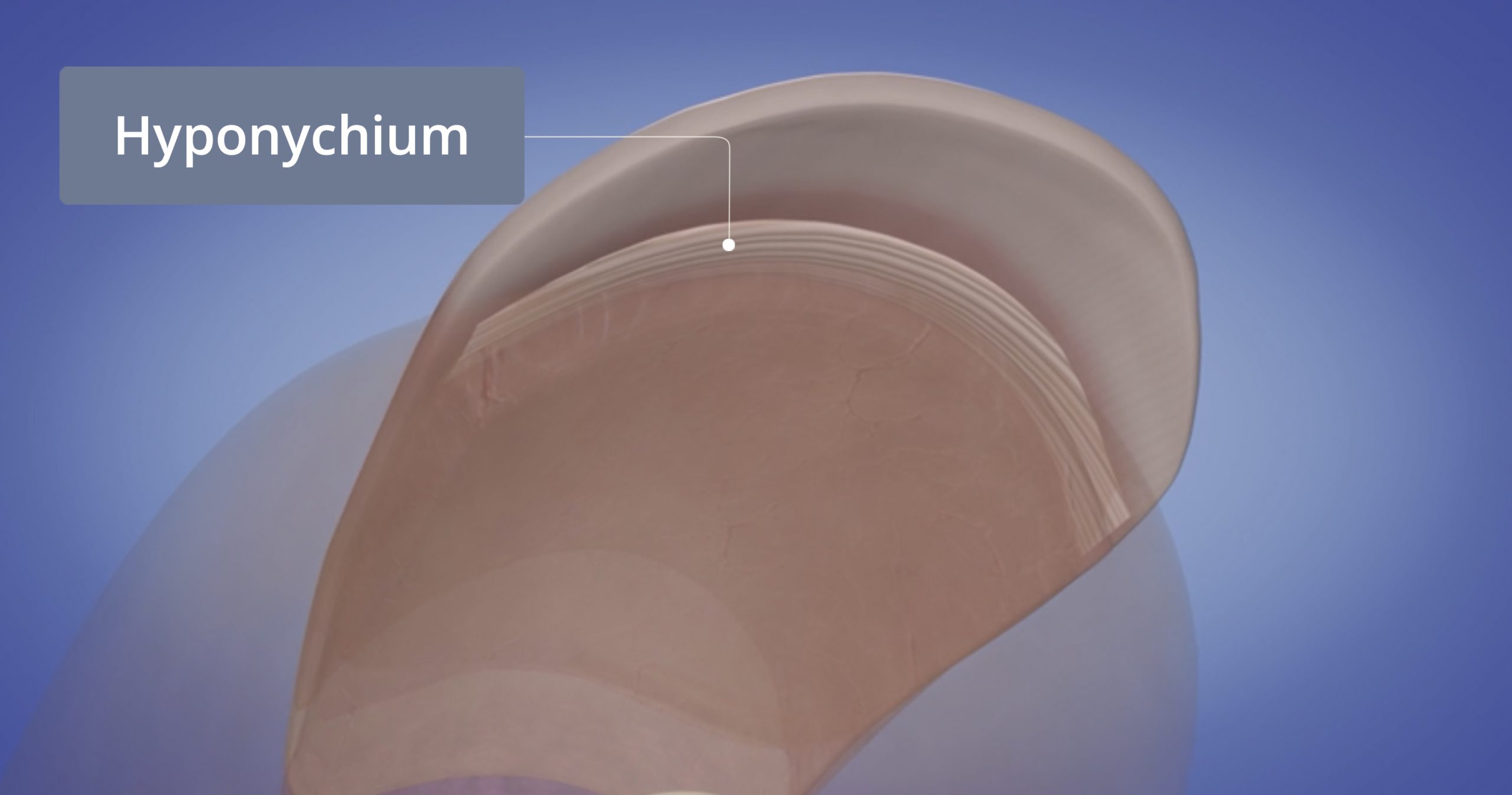
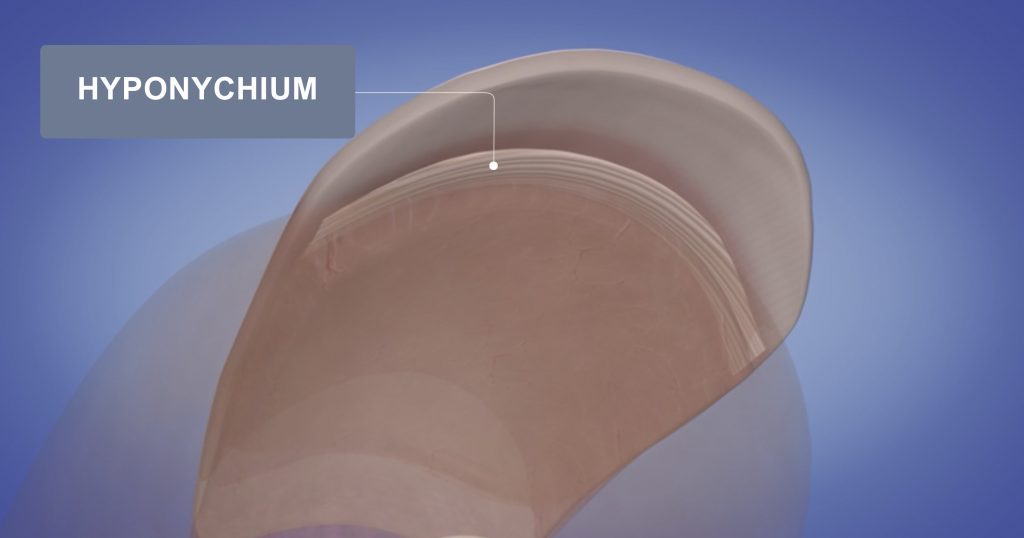
The hyponychium, located beneath the free edge of the nail plate at the distal edge of the finger, plays a critical role in protecting the nail unit. This structure forms (together with the onychodermal band) a tight seal that prevents the entry of harmful bacteria, allergens, and pathogens into the delicate areas of the nail, such as the nail bed and matrix. By acting as a barrier, the hyponychium ensures the overall health and integrity of the nail unit. The hyponychium is one of the 4 Guardian Seals of the nail unit.
Đầu dây thần kinh và hệ thống cảnh báo
Sự hiện diện của nhiều đầu dây thần kinh trong hạ móng đóng vai trò như một hệ thống cảnh báo. Khi lớp niêm phong bảo vệ này bị tổn hại, các đầu dây thần kinh này sẽ gửi tín hiệu gây khó chịu hoặc đau đớn, cảnh báo về khả năng gây tổn thương hoặc nhiễm trùng. Một lỗ thủng trong lớp niêm phong cho phép các tác nhân gây bệnh xâm nhập vào nền móng nhạy cảm, làm tăng nguy cơ nhiễm trùng.
Dấu hiệu nhiễm trùng hoặc hư hỏng
In some cases, the hyponychium may thicken or become discolored, which could indicate an infection. Other possible causes include damage from trauma, exposure to chemicals, or an underlying systemic condition or even an allergic reaction. Infection or damage here can also lead to the development of an extended and thickened hyponychium, a condition known as inverse pterygium. If an infection looks like it could possibly be fungal, it is necessary to perform tests, as visual examination alone is insufficient. Untreated, this condition can and will cause onycholysis, the separation of the nail plate from the nail bed, it’s a serious issue that can compromise the nail’s health.

Duy trì sức khỏe của Hyponychium thông qua việc chăm sóc móng đúng cách
Good nail hygiene is essential for maintaining the hyponychium’s integrity. Regular cleaning of the nail area and keeping it free from dirt and debris is crucial. Additionally, it is important to avoid activities that may cause trauma to the hyponychium, ensuring its ability to function effectively as a protective barrier.
Hỏi các chuyên gia
Làm thế nào để điều trị tình trạng mọc quá nhiều lông dưới móng?
This is called inverse pterygium. It will usually have blood and nerve endings and needs to be left alone. Regular applications of a good nail oil will help keep it supple and not become dry.
Làm thế nào để đẩy lùi lớp hạ móng?
You don’t push back the hyponychium. It is a important seal of the nail unit and should be left alone.
Sự khác biệt giữa hyponychium và eponychium là gì?
The hyponychium is a strong seal at the end of the finger and under the free edge. The eponychium is an area under the proximal nail fold that sheds the dead skin cells of the proximal nail fold called the cuticle. The cuticle and proximal nail fold form another strong and important seal of the nail unit.
Thư viện hình ảnh